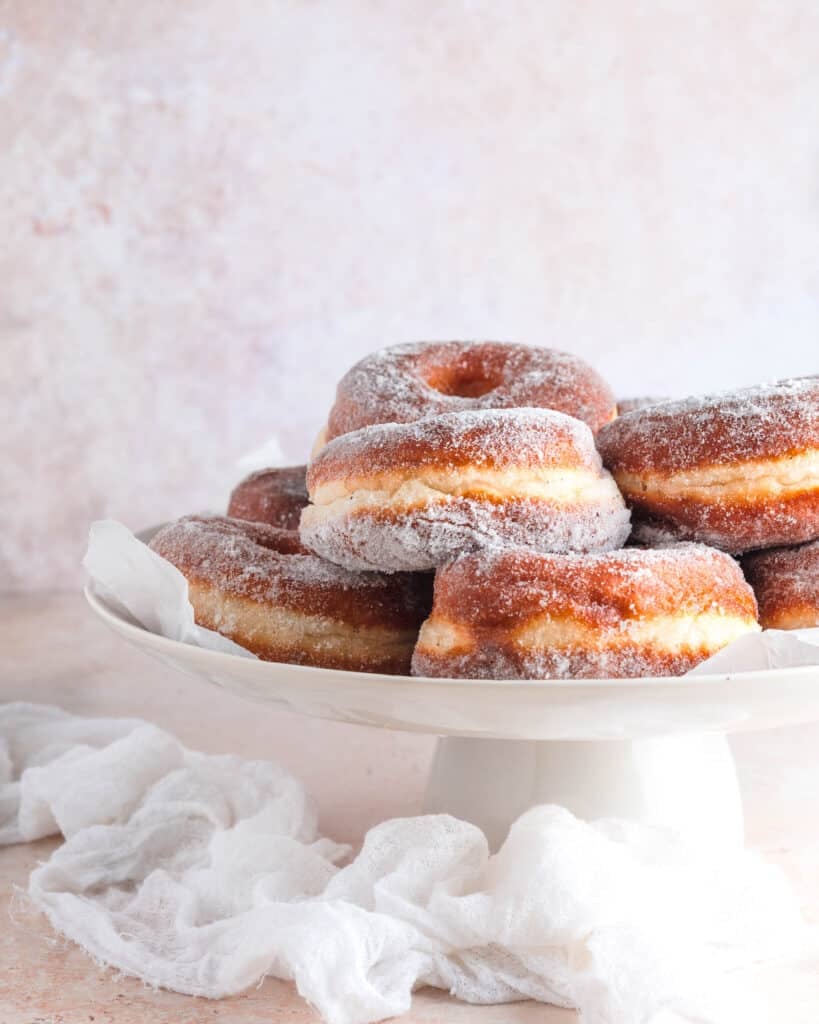
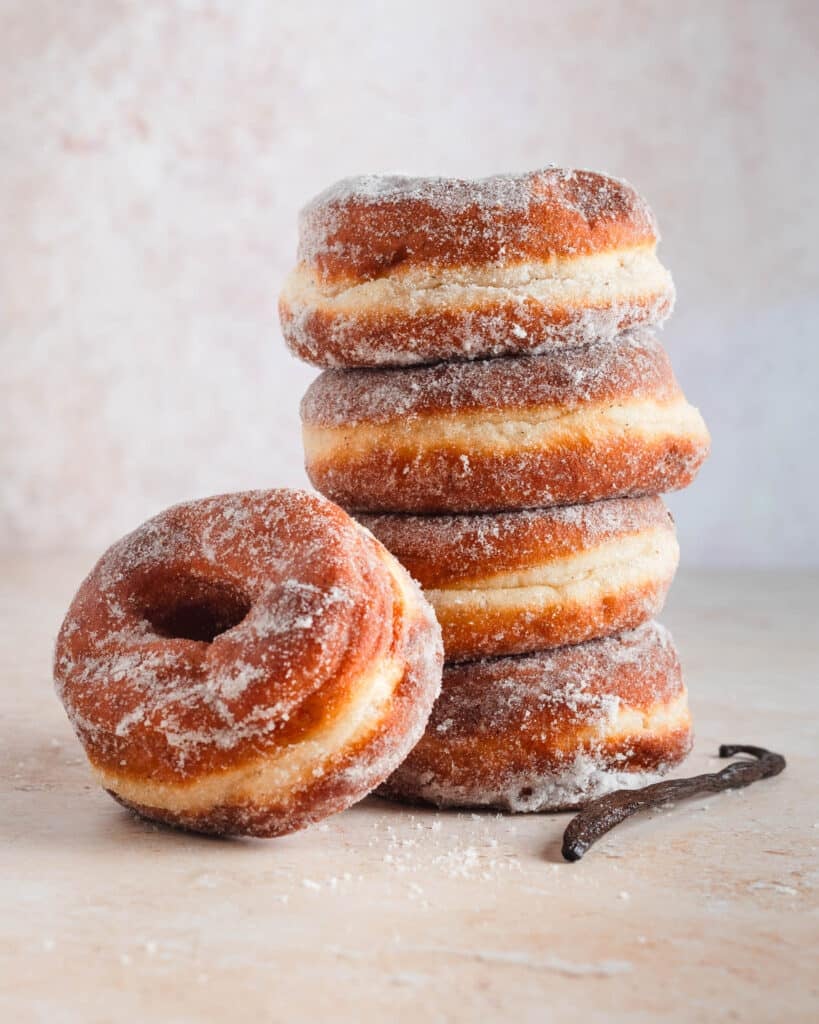

These classic fried sugar doughnuts are wonderfully light and pillow-soft, generously coated in vanilla sugar for that irresistible, traditional doughnut flavour. They take a little time and patience to make, but are absolutely worth the wait.
Why you would love these sugar ring doughnuts
The dough is made the night before and left overnight in the fridge to slow-proof, allowing the flavours to develop and making the dough easier to handle the next day
These classic fried sugar doughnuts are wonderfully light and pillow-soft.
The dough is enriched with milk, eggs, and butter, giving it rich flavour.
Finished with a generous coating of vanilla sugar, these doughnuts are the perfect sweet treat to enjoy fresh at home.
Ingredients
Unsalted butter -Adds richness, flavour, and moisture to the dough while contributing to a soft, pillow-like texture.
Whole Milk- The fat content in the milk helps create a tender doughnut texture and also gives the doughnuts a richer flavour.
Yeast- a leavening agent, plays a key role in creating the classic light, airy, and fluffy texture of doughnuts
Sugar– Caster or granulated sugar sweetens the dough and feeds the yeast for fermentation.
Bread Flour– The high protein content of bread flour develops more gluten, resulting in soft, fluffy doughnuts.
Salt– Balances the sweetness and enhances the flavour.
Nutmeg– Adds flavour to the dough.
Eggs-They add moisture to the dough while binding the ingredients together for structure.
Oil– Vegetable or sunflower oil is ideal for frying the doughnuts due to its neutral flavour and high smoke point.
Instructions
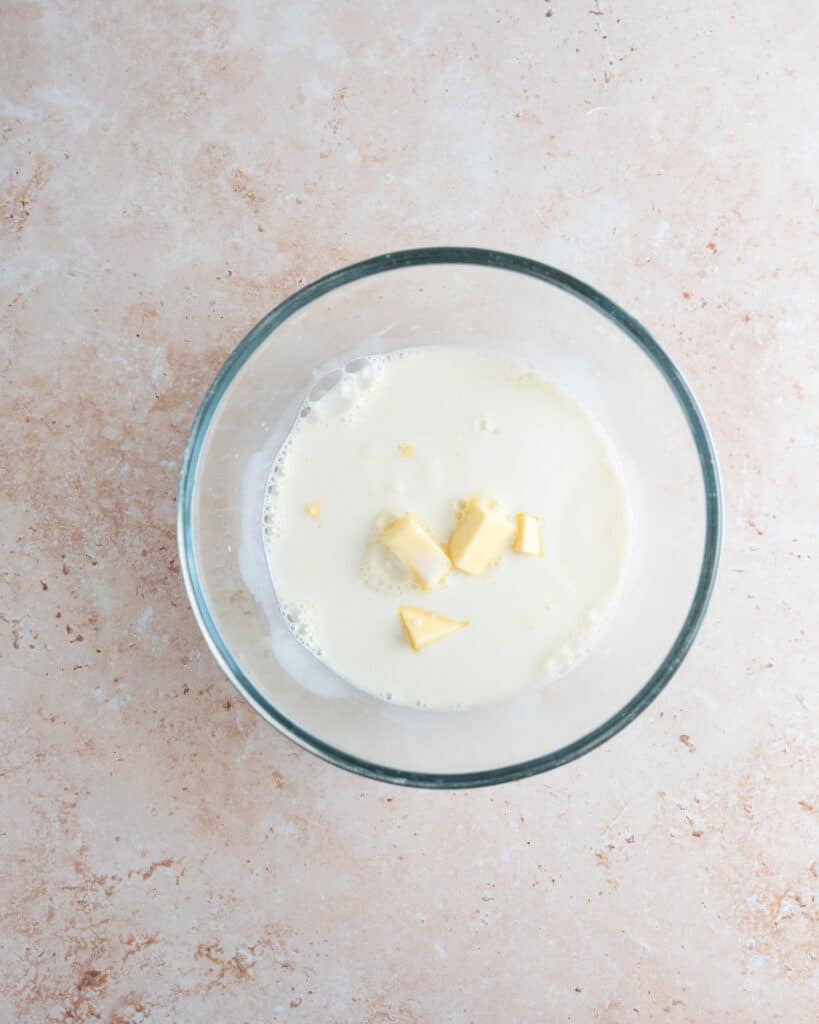
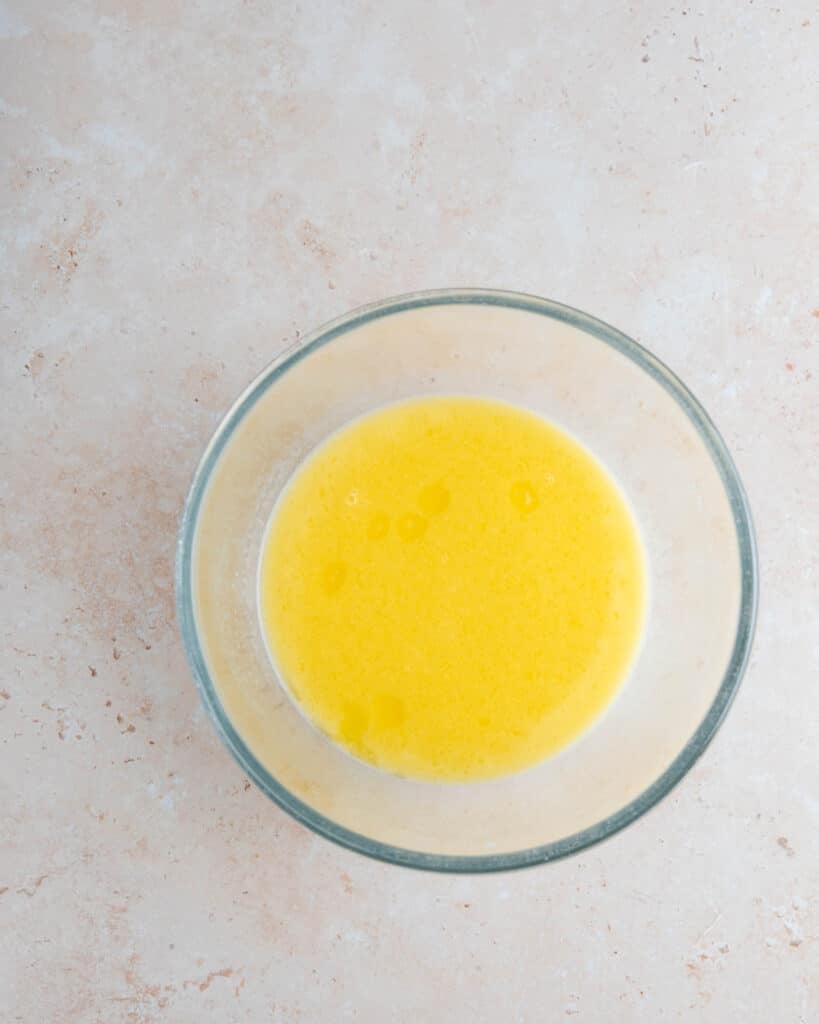
Heat the milk over medium heat until it just begins to bubble around the edges. Remove from the heat and pour over the butter. Set aside to cool slightly.
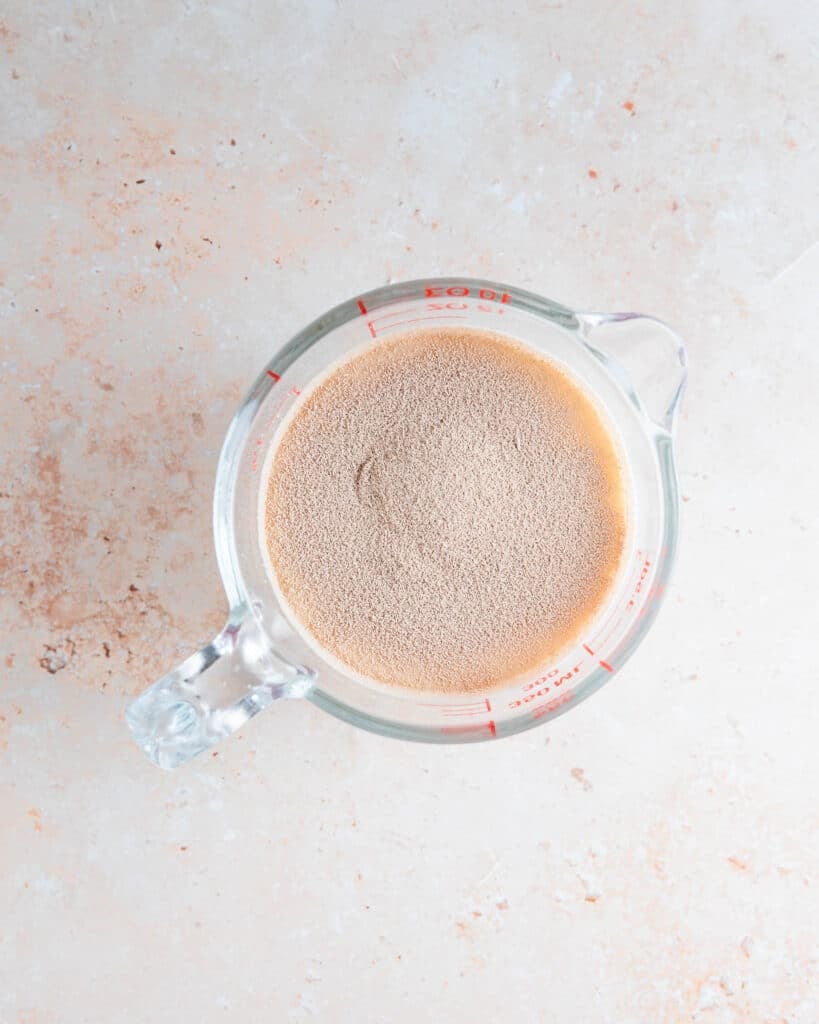
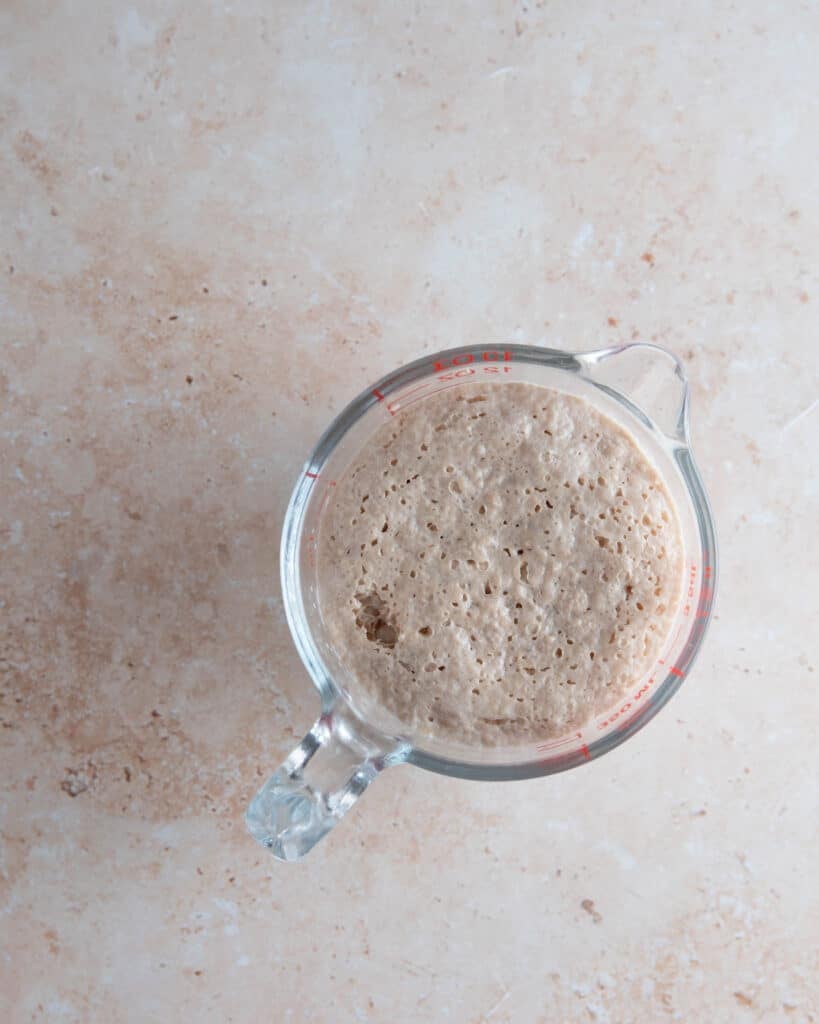
In a jug, combine warm water, 1 tablespoon of sugar and the yeast. Cover loosely and leave for 10 minutes, or until the mixture becomes bubbly and foamy.
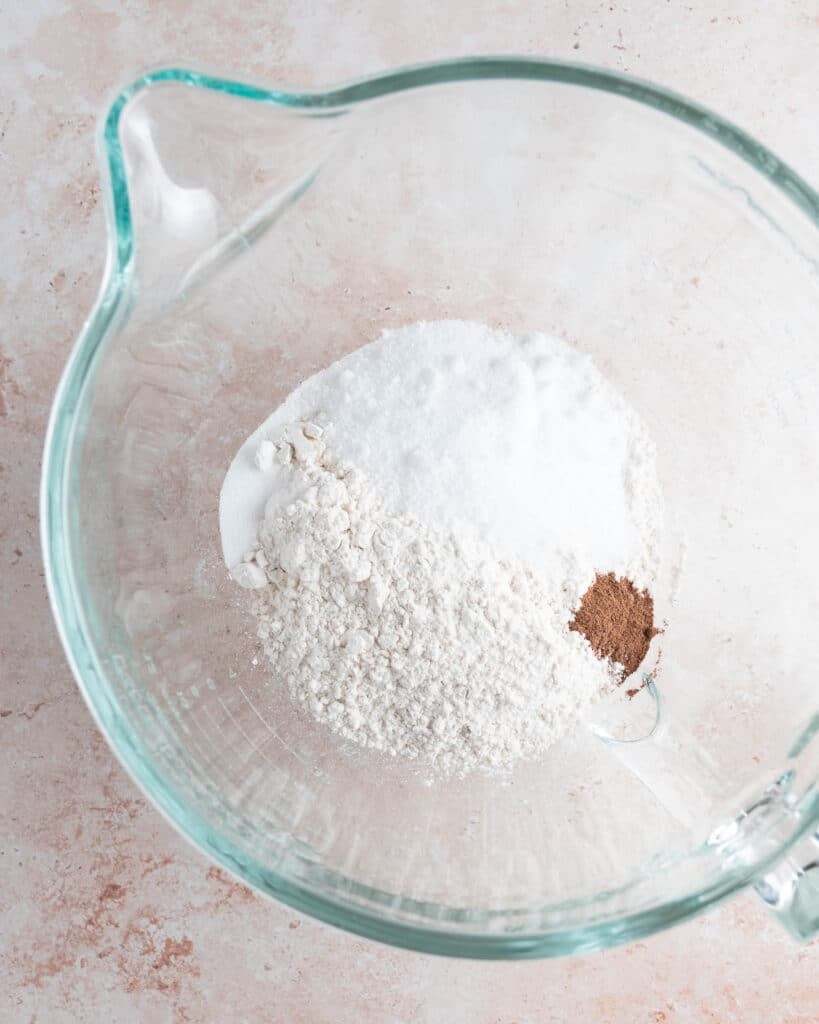
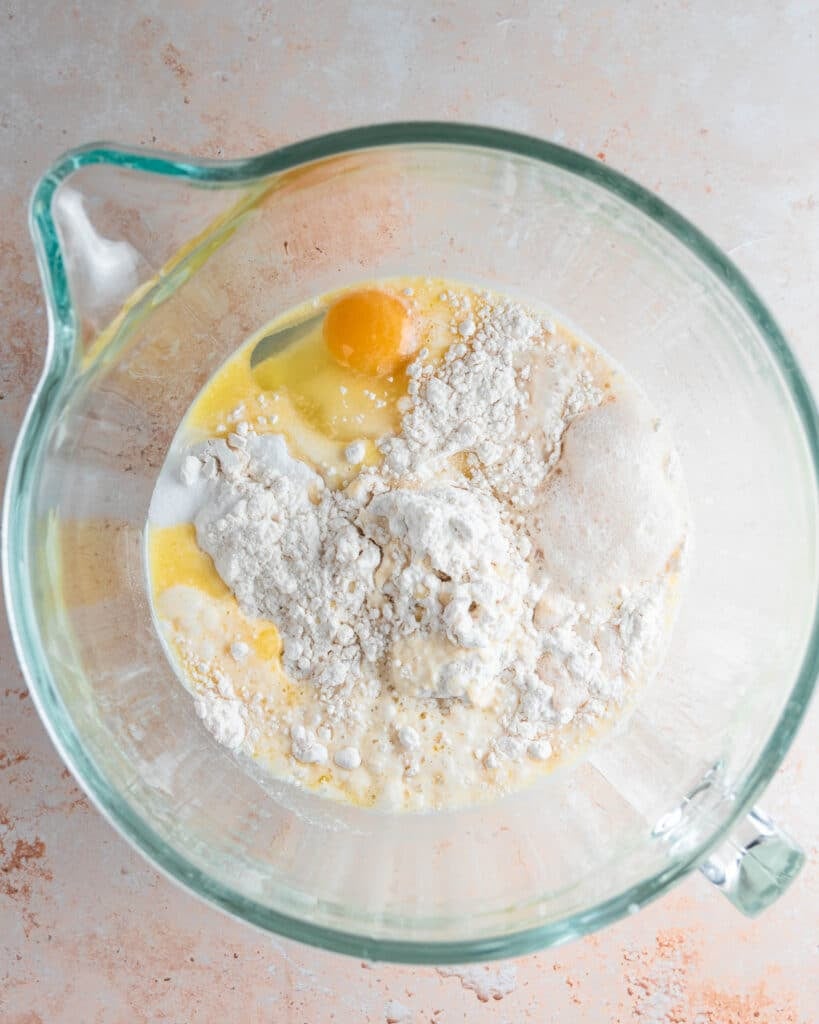
In the bowl of your stand mixer, combine flour, salt, nutmeg and the remaining sugar.
Add in eggs, yeast, milk and butter mixture.
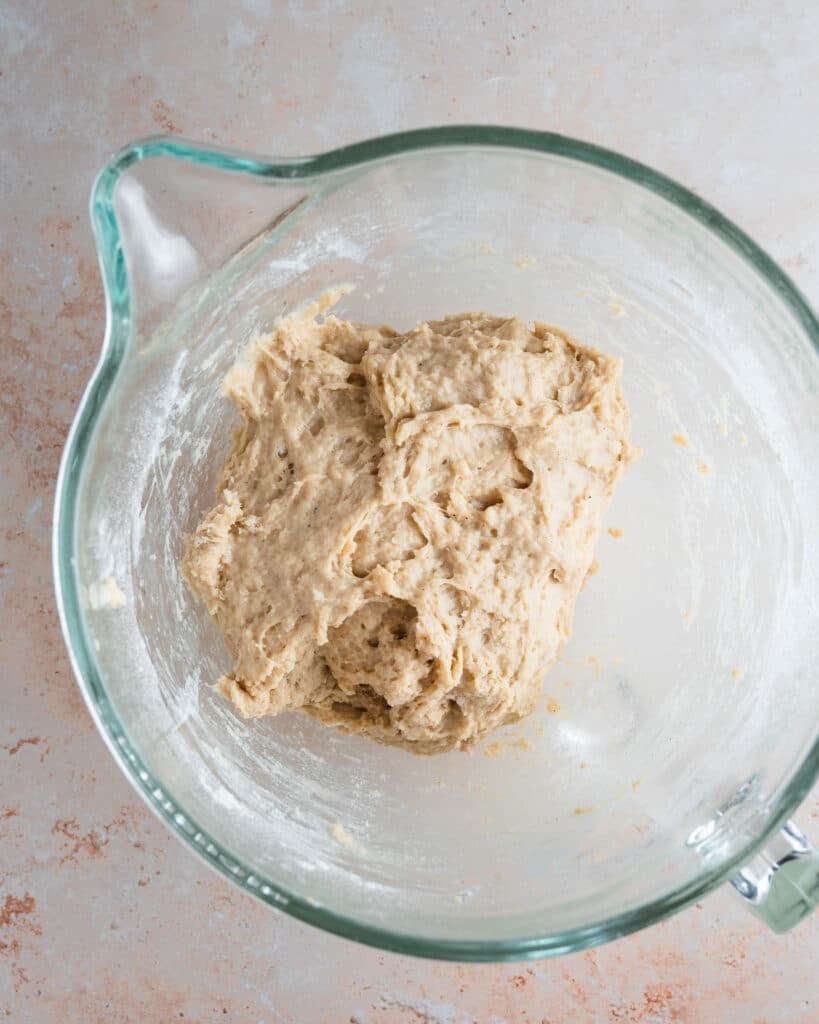
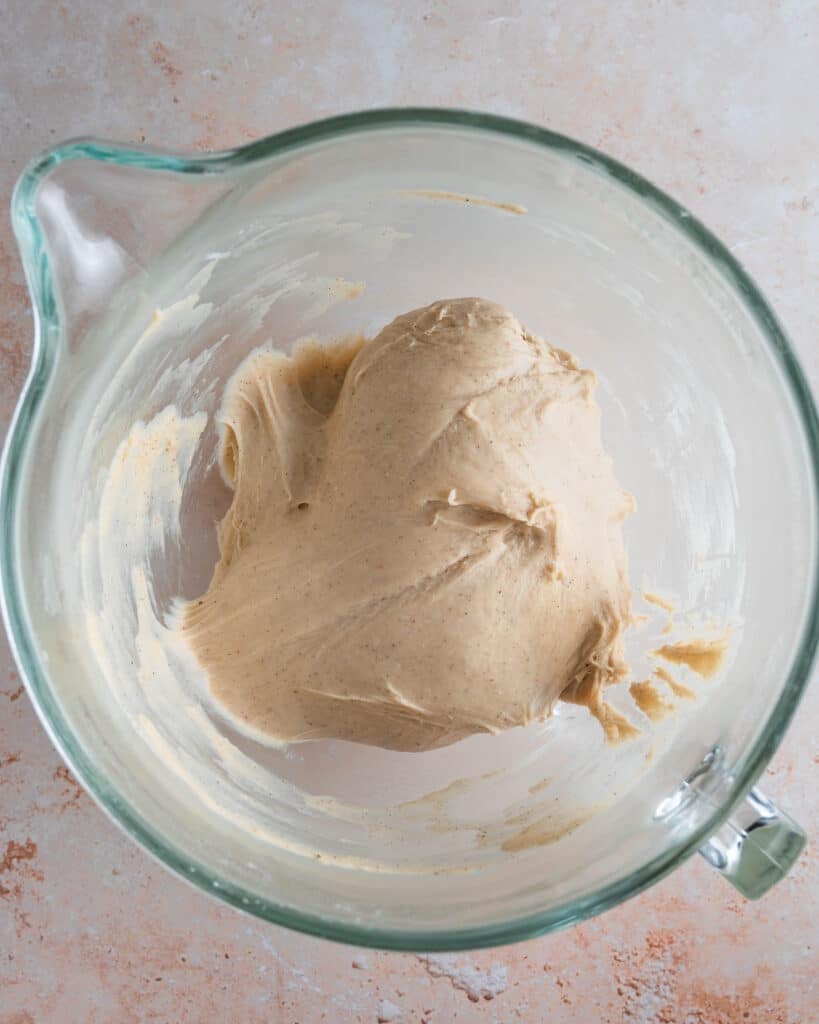
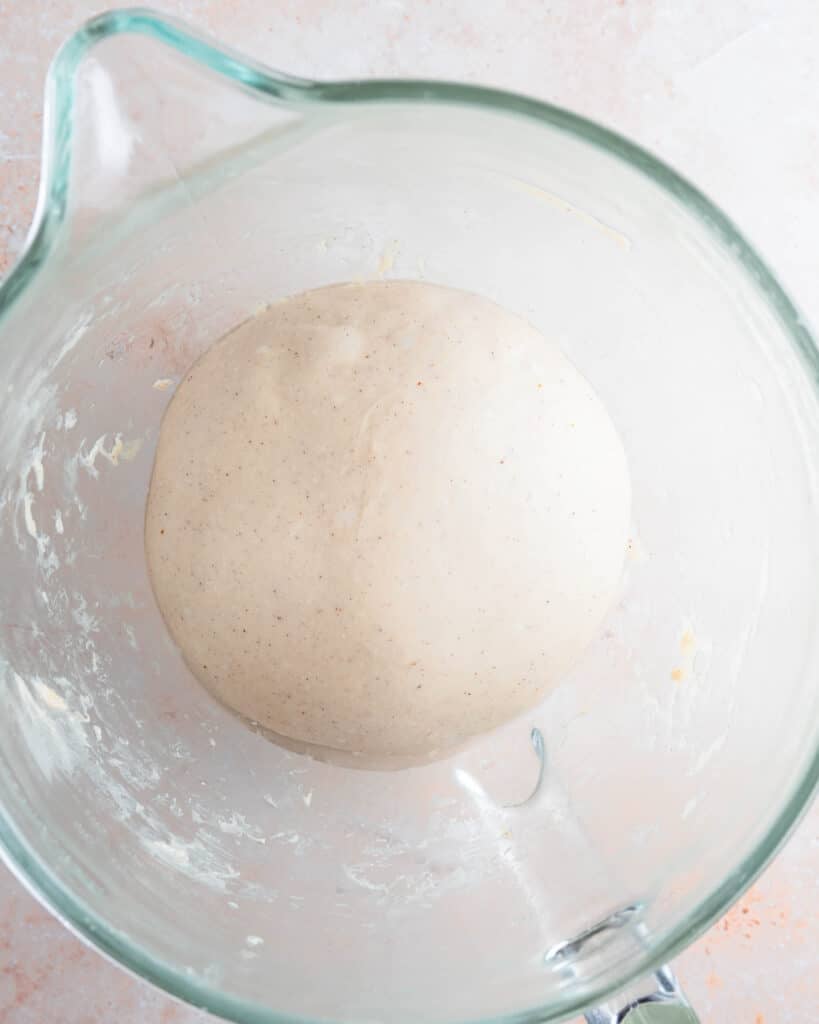
Using the dough hook, knead for 10–20 minutes, depending on your mixer. The dough will initially look shaggy, but it should gradually become smooth and elastic.
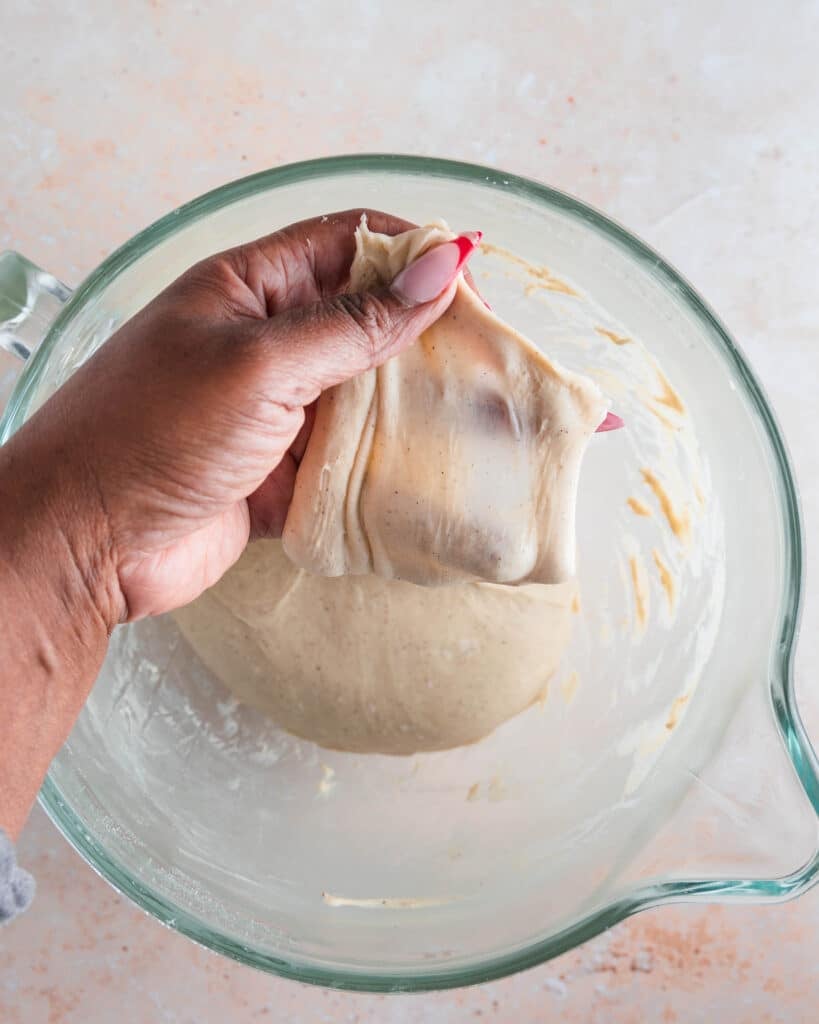
To check whether the dough is ready, perform the windowpane test. Stretch a small piece of dough between your fingers. It should stretch thin enough to become translucent without tearing.
Remove the dough from the mixer and shape it into a smooth ball.
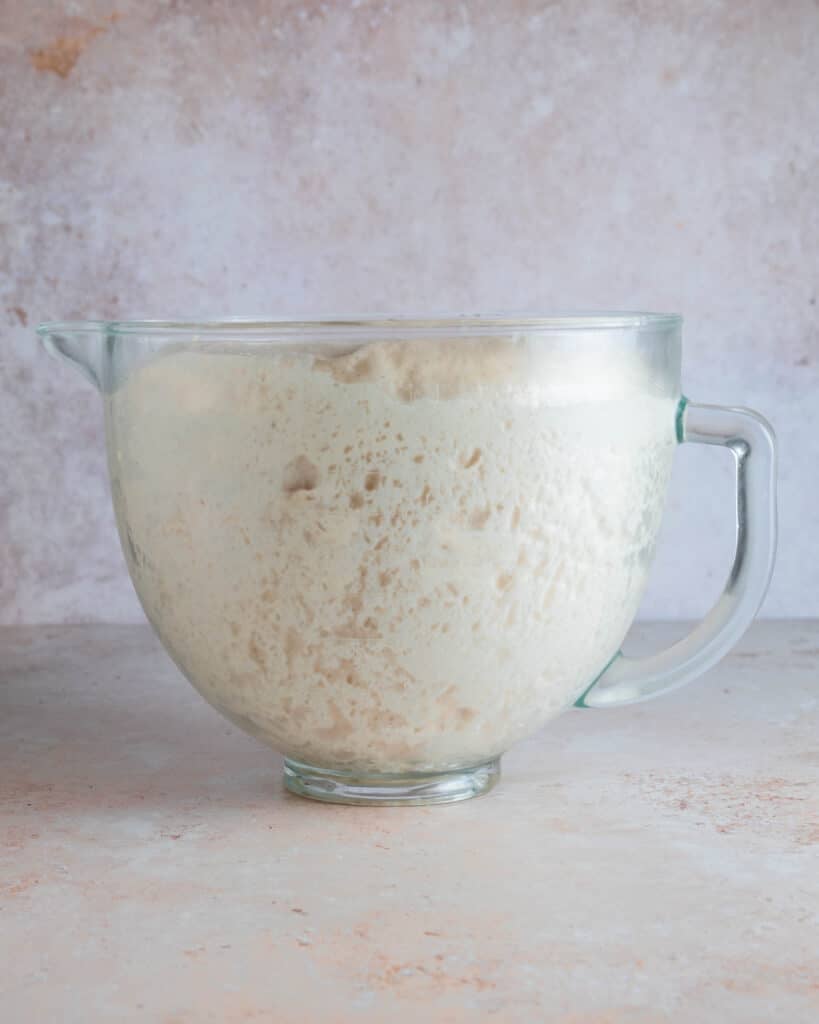
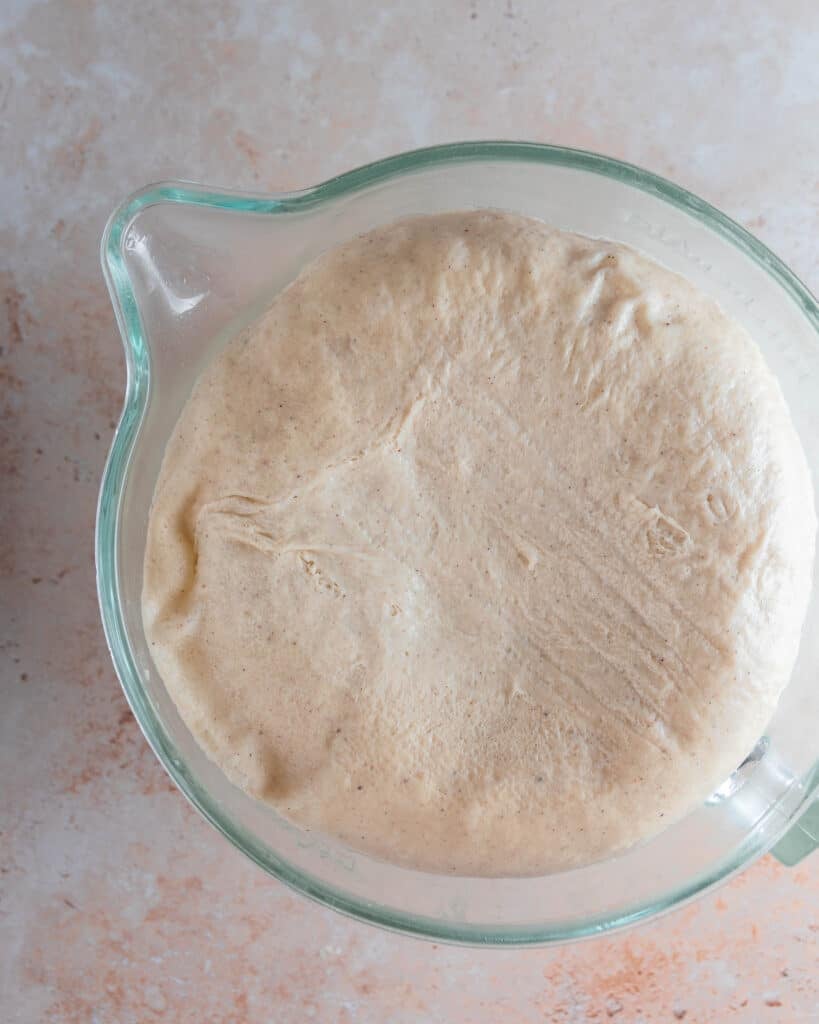
Lightly grease a large bowl with oil and place the dough inside. Cover with cling film and leave at room temperature for 1 hour. Transfer the covered bowl to the fridge and leave overnight.
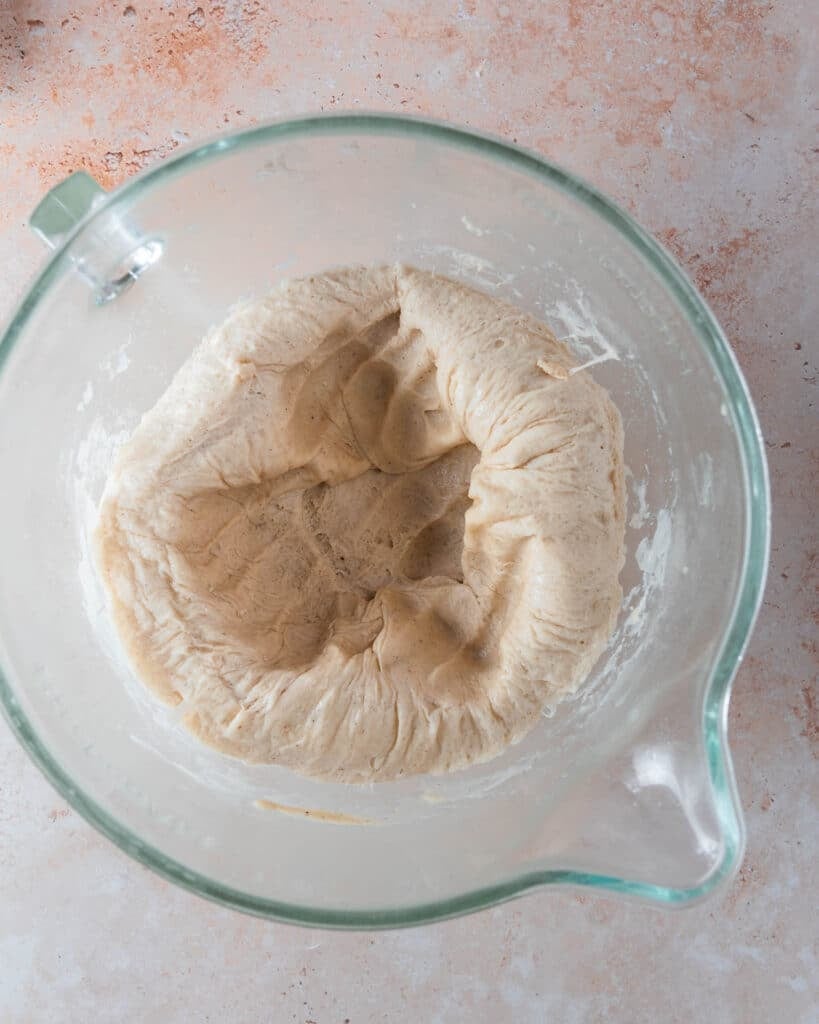
Remove the dough from the refrigerator and gently punch it down to release the air.
Gently punch it down to release the air.
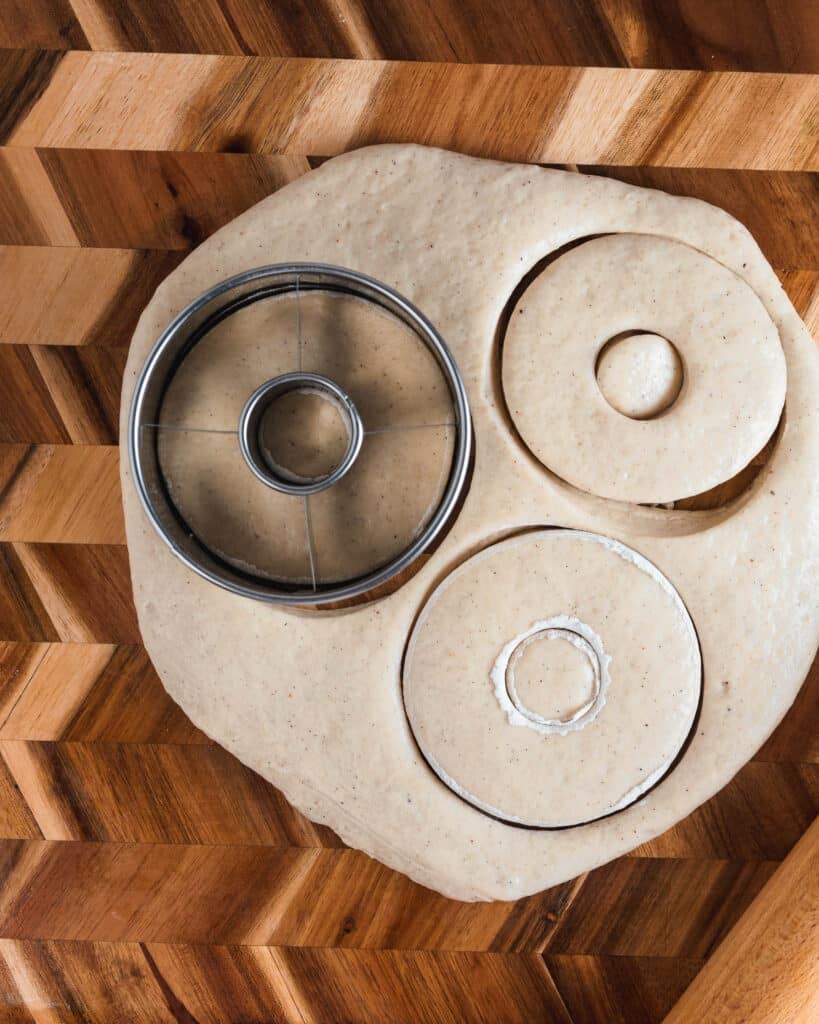
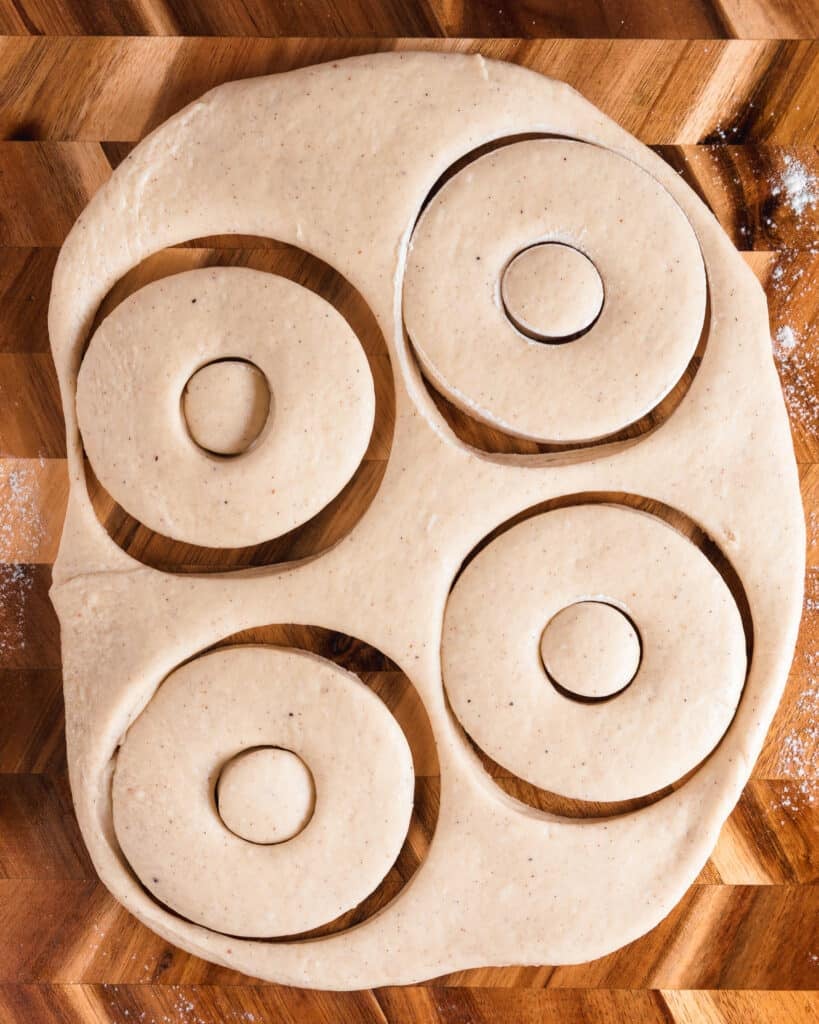
Transfer it to a lightly floured surface and roll it out to about ½ inch thick. Cut out the doughnuts using a doughnut cutter. Re-roll any scraps and cut out additional doughnuts.
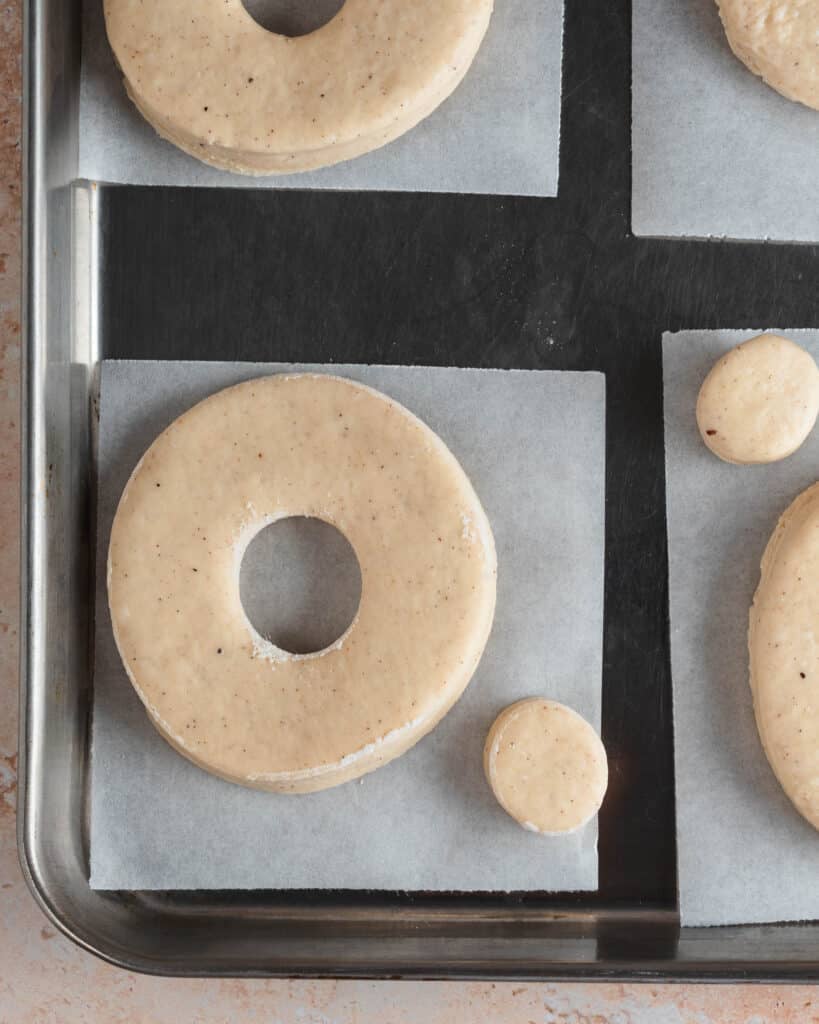
Place each doughnut on a piece of parchment and then on a baking tray. Loosely cover with cling film or a clean kitchen towel.
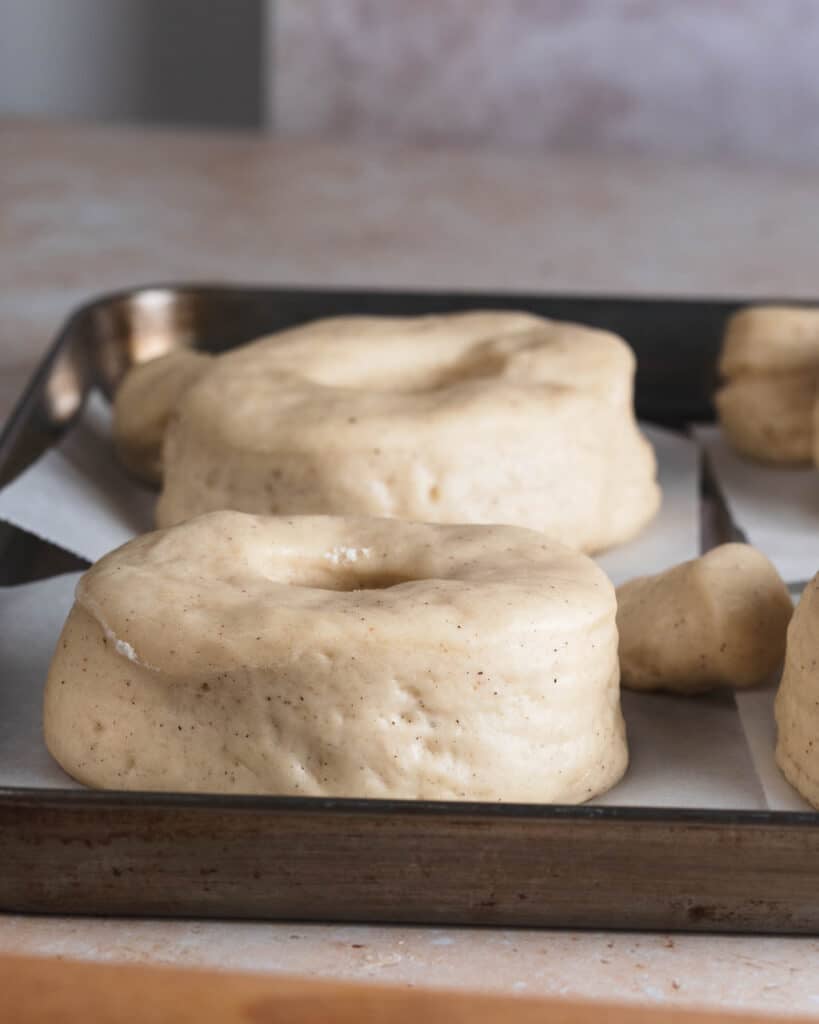
To create a warm proofing environment, preheat your oven to 200°C for just 1 minute, then switch it off. Place the covered doughnuts inside and allow them to rise until doubled in size, approximately 30–60 minutes. Ensure the oven is only gently warm, not hot.
During the final 10 minutes of the proof, heat the oil over medium heat to 320-340°F (160-170 °C). Use a kitchen thermometer to maintain a consistent temperature throughout frying.
Carefully place the doughnuts into the hot oil, parchment side up. After a few seconds, remove the parchment paper.
Fry the doughnuts for 2 minutes on each side, until golden brown and cooked through. Transfer the fried doughnuts to a tray lined with paper towels to drain. Repeat with the remaining doughnuts, allowing the oil to return to the correct temperature between batches.
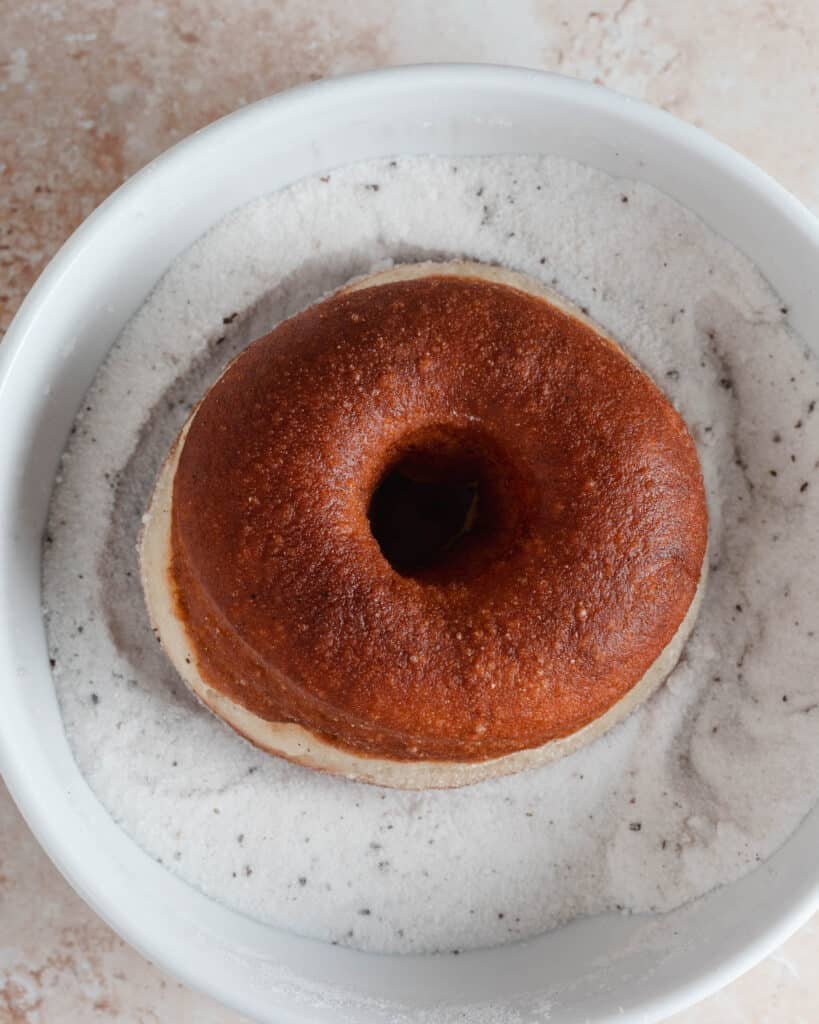
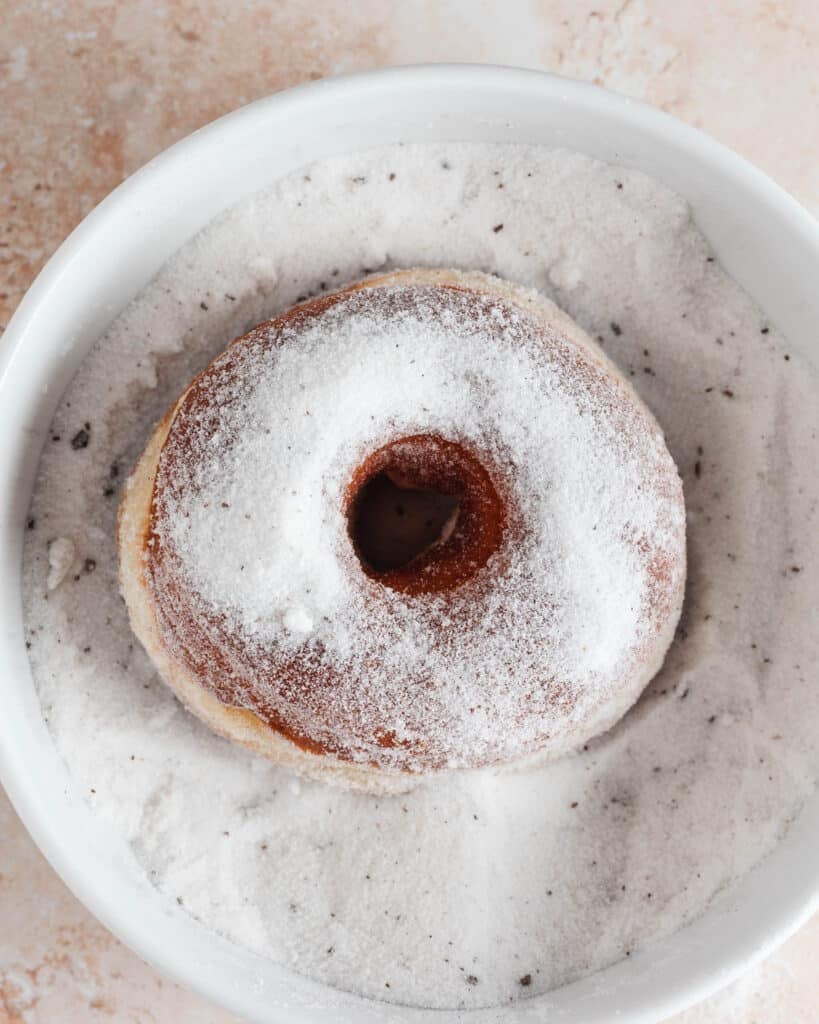
Allow the doughnuts to cool slightly, then roll them in sugar until evenly coated.
Tips for achieving the perfect ring doughnuts
You can make these doughnuts with plain flour, but bread flour is recommended for a better texture and a chewier, more structured crumb.
Before using yeast, especially if it has been stored for a while, check that it is still active. Combine the yeast with 1 teaspoon of sugar and warm water at approximately 100–110°F (38–43°C). Leave for 5–10 minutes. If the yeast is active, the mixture should become foamy and bubbly.
A well-proofed doughnut often develops a pale ring around its middle after frying, known as the proof line. This is a useful visual sign of good proofing.
Use a neutral-tasting oil, such as vegetable or sunflower oil, so the flavour of the doughnuts shines through.
A heavy-based pot or pan helps distribute and retain heat evenly, making it easier to maintain a consistent frying temperature,
Keep the oil between 320–340°F (160–170°C). If the oil is too cool, the doughnuts may absorb excess oil and become greasy. If it is too hot, they may brown too quickly before cooking through. For an accurate reading, use a candy thermometer or a suitable deep-frying thermometer.

Equipment
- Parchment paper cut into 4-inch squares
- Candy thermometer
- 3-inch and 1½-inch round cutters, or a doughnut cutter
- Heavy-based pan
Ingredients
Dough
- 90 ml warm water
- 11/2 teaspoons yeast
- 160 ml milk
- 60 g butter
- 65 g sugar
- 1 teaspoon nutmeg
- 1 teaspoon salt
- 2 eggs
- 480 g plain flour
Vanilla Sugar
- 1 cup granulated sugar
- 1 vanilla bean scraped
Instructions
- Heat the milk over medium heat until it just begins to bubble around the edges. Remove from the heat and pour over the butter. Set aside to cool slightly.
- In a jug, combine warm water, 1 tablespoon of sugar and the yeast. Cover loosely and leave for 10 minutes, or until the mixture becomes bubbly and foamy.
- In the bowl of your stand mixer, combine flour, salt, nutmeg and the remaining sugar.
- Add in eggs, yeast, milk and butter mixture.
- Using the dough hook, knead for 10–20 minutes, depending on your mixer. The dough will initially look shaggy, but it should gradually become smooth and elastic.
- Using the dough hook, knead the dough for 10–20 minutes, depending on the type of mixer used. The dough will initially look shaggy, but it should become smooth and elastic.
- To check whether the dough is ready, perform the windowpane test. Stretch a small piece of dough between your fingers. It should stretch thin enough to become translucent. without tearing.
- Remove the dough from the mixer and shape it into a smooth ball.
- Lightly grease a large bowl with oil and place the dough inside. Cover with cling film and leave at room temperature for 1 hour. Transfer the covered bowl to the fridge and leave overnight.
- The dough will have doubled in size. Remove the dough from the refrigerator and gently punch it down to release the air.
- Transfer it to a lightly floured surface and roll it out to about ½ inch thick. Cut out the doughnuts using a doughnut cutter. Re-roll any scraps and cut out additional doughnuts.
- Place each doughnut on a piece of parchment and then on a baking tray. Loosely cover with cling film or a clean kitchen towel.
- To create a warm proofing environment, preheat your oven to 200°C for just 1 minute, then switch it off. Place the covered doughnuts inside and allow them to rise until doubled in size, approximately 30–60 minutes. Ensure the oven is only gently warm, not hot.
- During the final 10 minutes of the proof, heat the oil over medium heat to 320-340°F (160-170 °C). Use a kitchen thermometer to maintain a consistent temperature throughout frying.
- Carefully place the doughnuts into the hot oil, parchment side up. After a few seconds, remove the parchment paper.
- Fry the doughnuts for 2 minutes on each side, until golden brown and cooked through. Transfer the fried doughnuts to a tray lined with paper towels to drain. Repeat with the remaining doughnuts, allowing the oil to return to the correct temperature between batches.
- Allow the doughnuts to cool slightly, then roll them in sugar until evenly coated.
Vanilla Sugar
- Slice the vanilla beans in half lengthwise. Using the back of a small paring knife, scrape out the seeds in a downward motion. Reserve the empty pods. Place the sugar in the bowl of a food processor and add the vanilla seeds.
- Pulse until the vanilla seeds are evenly distributed throughout the sugar. Transfer to jars or a large airtight container. Bury the reserved vanilla pods in the sugar, cutting them in half if needed to fit. For the best flavour, allow the sugar to infuse for at least 2 weeks, or longer for a more pronounced vanilla flavour.


Those look incredible! There’s nothing like homemade doughnuts fresh out of the fryer 🙂
Thank you June and i totally agree. Freshly made homemade doughnuts are delicious.
n doughnuts. I am still waiting for my velvet cake Chichi! Great website!
You will get your red velvet soon Alfy. Thank you for the great website x
I wouldn’t leave a single doughnut alive there! 😉
Lol Lily Lau. Thank you for stopping by 🙂
These are rockin’ my world! Amazing!!!
Thank you Amanda
Doughnuts were my favourite treat when I was a child. I would beg my mom to buy me these every morning! The sugar was my favorite part 🙂 Your doughnuts look so delicious!
The sugar was my favourite part of a doughnut as well Shiran, lol. Thank you for stopping by.